

P5AT 3.2L 5-Cylinder Diesel – Head Gasket, EGR & Cylinder Head Repairs
UMR Engines has extensive experience diagnosing and repairing Ford Ranger and Mazda BT-50 vehicles fitted with the 3.2 litre 5-cylinder P5AT diesel engine. These engines can develop cooling system, EGR cooler, cylinder head, injector and turbocharger problems that require careful diagnosis before repairs are carried out.
Our mechanical workshop and in-house engine reconditioning facility allow us to remove, inspect, test, machine and recondition cylinder heads as part of the overall repair process.
Common P5AT Engine Problems
Ford Ranger and Mazda BT-50 3.2 P5AT engines can present with a range of cooling system and engine-related faults. Correct diagnosis is important because several different problems can produce similar symptoms.
Common concerns can include:
- EGR cooler failure
- Coolant loss or overheating
- Blown head gasket
- Cylinder head damage
- Diesel injector problems
- Internal engine damage
- Turbocharger failure
- Air intake system contamination
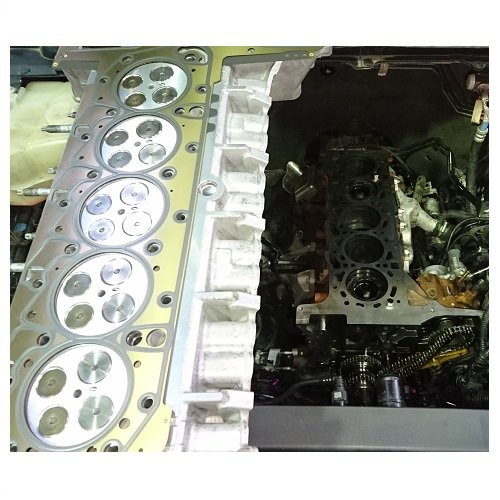
P5AT Head Gasket Repairs
A head gasket failure should not be treated as an isolated gasket replacement without investigating why the engine overheated or lost coolant.
Possible contributing faults can include EGR cooler problems, radiator restrictions or leaks, cooling hose failures, thermostat faults and other cooling system concerns.
EGR Cooler Testing & Coolant Loss Diagnosis
EGR cooler failure can result in coolant being lost internally through the exhaust system. If coolant loss continues unnoticed, the engine may overheat and further damage can occur.
UMR Engines has used pressure testing to help determine whether an EGR cooler has a current internal leak. Testing under both cold and heated conditions can be useful because some faults may only become apparent as temperatures change.
Why Test the EGR Cooler?
When investigating coolant loss, it is important to establish where the coolant is going rather than replacing components without confirming the cause.
If the EGR cooler does not show a current leak during testing, other possible causes can then be investigated, including:
- Cooling system hoses
- Radiator leaks or restrictions
- Thermostat faults
- Water pump problems
- Head gasket failure
- Cylinder head or engine block damage
Testing Has Limits
A pressure test can help identify a fault that is present at the time of testing, but it cannot predict whether an EGR cooler may fail later.
The condition of the cooling system, service history and the cause of the original coolant loss or overheating still need to be considered as part of the overall diagnosis.
Cylinder Head Reconditioning
Once the cylinder head has been removed, it should be properly inspected before reassembly. The P5AT cylinder head may require testing, cleaning, machining and valve-train repairs depending on its condition.
In-House Cylinder Head Work
Depending on inspection results, cylinder head reconditioning may include:
- Full dismantling and cleaning
- Cylinder head inspection
- Pressure testing
- Hardness checking
- Checking for distortion
- Surface machining
- Valve and valve-seat servicing
- Valve guide replacement where required
- Valve stem seals
- Final cleaning and reassembly

The condition of the cylinder head determines the machining and component replacement required. Measurements and inspection should guide the repair rather than assuming every cylinder head requires the same work.
Worn P5AT Valve Guides
The following UMR Engines workshop video shows wear identified in P5AT exhaust valve guides during cylinder head inspection.
Diesel Injector Problems

Injector faults can contribute to poor combustion, engine performance problems and potentially serious internal engine damage.
Injector condition should be considered when diagnosing combustion-related problems. If injectors are removed, the injector seating areas and sealing washers should also be inspected to ensure correct sealing on reassembly.
Turbocharger & Intake System

Low boost, lack of power, unusual turbo noise or excessive turbo wear should be properly investigated before replacing the turbocharger.
The air filtration and intake system should be inspected for leaks or contamination, while turbo oil supply and return systems also need to be considered as part of the repair.
P5AT Turbocharger Wear
This UMR Engines workshop video shows turbocharger wear found during investigation of a Ford Ranger 3.2 P5AT.
Important P5AT Servicing Considerations
Correct servicing procedures are particularly important on the P5AT engine. Oil pressure should be confirmed after servicing before the vehicle is returned to normal operation.
Rather than relying on a single servicing rule or drain-time figure, workshop procedures should follow the current manufacturer information applicable to the vehicle and engine being serviced.
Ford Ranger & Mazda BT-50 P5AT Applications
This repair information applies to Ford Ranger and Mazda BT-50 models fitted with the 3.2 litre 5-cylinder P5AT diesel engine, including commonly encountered PX/PX2 Ranger and corresponding BT-50 applications.
Vehicle production dates and specifications vary. Engine identification should be confirmed before parts are ordered or repairs are undertaken.
View our general Blown Head Gasket Repair information →
Ford Ranger or Mazda BT-50 3.2 P5AT Problems?
Send us a booking request or call our workshop to discuss the symptoms, repair history and condition of your vehicle.