

Holden VE & VZ Commodore Timing Chain Diagnosis & Replacement
Timing chain problems are common on Holden Alloytec and SIDI V6 engines, including the LE0, LY7, LLT, LFX, LU1, LF1, LFW and LCA (H9) engines. UMR Engines has extensive hands-on experience diagnosing and replacing timing chains on these engines at our Brisbane workshop.
Correct diagnosis is important because an engine warning light, rattling noise or timing-related fault code does not automatically mean the timing chains require replacement. Other engine-management, camshaft-control and mechanical faults can produce similar symptoms.
Timing Chain Fault Diagnosis
Timing chain wear can affect the relationship between the crankshaft and camshafts, eventually causing engine-management faults or poor engine operation.
Possible symptoms can include:
- Rattle or unusual noise during startup
- Noise from the front of the engine
- Engine warning light
- Timing-related fault codes
- Rough or unstable idle
- Poor engine performance
- Engine vibration
- Difficult starting in some cases
UMR Engines can scan the engine-management system, inspect diagnostic data and carry out further testing before determining whether timing chain replacement is required.
Holden Alloytec Timing Chain
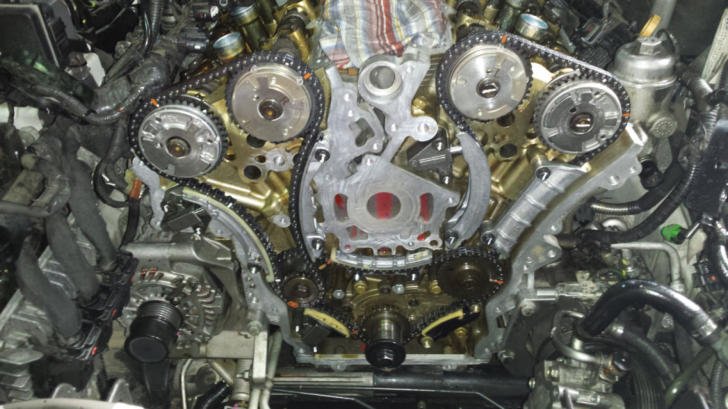
The Holden Alloytec and related V6 timing systems use multiple timing chains, guides, tensioners and camshaft-control components.
Early-type timing systems use two roller chains and one Morse chain, while the later-type timing system uses three Morse chains.
From our workshop experience, timing chain problems can occur at considerably different kilometres from one vehicle to another. We have replaced timing chains on vehicles around the 100,000 km mark, while other vehicles have travelled considerably further without showing timing chain symptoms.
Vehicle condition, servicing history, engine oil condition and the condition of the timing system all need to be considered when diagnosing these engines.
Common Timing-Related Fault Codes
Diagnostic trouble codes that may be encountered when investigating camshaft and crankshaft timing problems include:
- P0008 – Engine Position System Performance Bank 1
- P0009 – Engine Position System Performance Bank 2
- P0011 – Camshaft Position Timing Over-Advanced Bank 1
- P0016 – Crankshaft/Camshaft Position Correlation Bank 1 Sensor A
- P0017 – Crankshaft/Camshaft Position Correlation Bank 1 Sensor B
- P0018 – Crankshaft/Camshaft Position Correlation Bank 2 Sensor A
- P0019 – Crankshaft/Camshaft Position Correlation Bank 2 Sensor B
These fault codes can assist with diagnosis, but a stored timing-related code alone should not be treated as proof that the timing chains require replacement. The cause of the fault should be diagnosed before repairs are carried out.
Oil Sludge & Extended Service Intervals

From our workshop experience repairing these engines, heavy oil sludge and hardened deposits are commonly found in vehicles that have experienced extended oil-change intervals.
In severe cases, we have dismantled engines where the build-up behind the timing cover is so substantial that the timing chains, guides and surrounding components are heavily surrounded by hardened deposits.
The timing chain tensioners and variable camshaft timing components rely on clean engine oil, suitable oil pressure and unrestricted oil passages to operate correctly. Heavy sludge and contamination can restrict these passages and interfere with the operation of the timing system.
Cleaning During Timing Chain Repairs
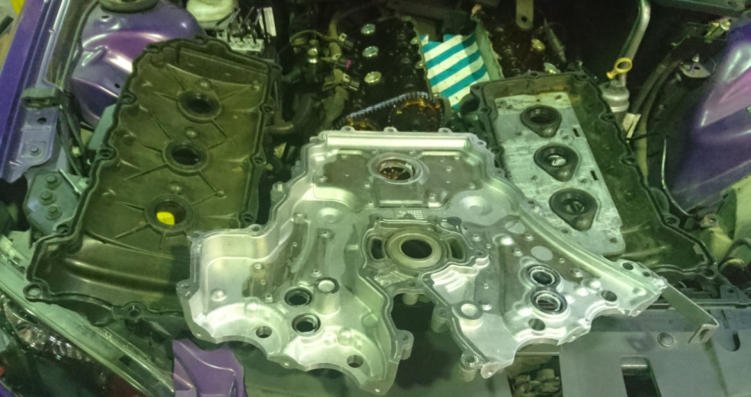
When carrying out a timing chain replacement, the condition of the timing cover, rocker covers and surrounding engine components is also important.
Where required, sensors and seals can be removed from the covers before they are thoroughly cleaned, allowing accumulated sludge, carbon and oil deposits to be removed from areas that are difficult to access while the engine is assembled.
Seals and gaskets are replaced as required during reassembly, together with engine oil, oil filter and coolant as part of completing the repair where applicable.
Our Oil & Filter Service Recommendation
Based on our hands-on experience dismantling and repairing these engines, UMR Engines recommends more frequent engine oil and filter changes rather than continually operating the engine to an extended oil-change interval.
For these engines, we recommend changing the engine oil and oil filter approximately every 5,000 km.
Keeping clean, correct-specification engine oil in the engine helps reduce the accumulation of sludge and deposits and is particularly important for components such as the timing chain tensioners and variable camshaft timing system that rely on engine oil for their operation.
Using good-quality fuel together with regular oil and filter changes can also help reduce engine deposits and maintain a cleaner engine over its service life.
Timing Chain Kit Replacement
A timing chain repair involves considerably more than simply replacing one chain. Depending on the particular engine and its condition, the timing system can require replacement or inspection of several associated components.
- Timing chains
- Timing chain guides
- Timing chain tensioners
- Timing sprockets where required
- Camshaft timing components
- Timing-cover seals and gaskets
- Front crankshaft seal where required
- Engine oil, filter and coolant as required
UMR Engines uses the appropriate timing and alignment tools when carrying out these repairs, including the camshaft alignment and timing tools required for the particular engine application.
Other Faults That Can Sound Like Timing Chain Problems
Not every noise from the front of an Alloytec engine is caused by the timing chains. Diagnosis may also need to consider other components and faults such as:
- Harmonic balancer
- Variable camshaft timing components
- Camshaft actuator solenoids
- Camshaft position sensors
- Crankshaft position sensor
- Flex plate
- Torque converter or transmission-related noises
- Other internal engine noises
This is why UMR Engines recommends diagnosing the reported noise, warning light or fault code before assuming that a complete timing chain kit is required.
Common Holden Models & Engine Codes
These timing chain systems are used across a range of Holden Alloytec and SIDI V6 engines. Common engine codes include LE0, LY7, LLT, LFX, LU1, LF1, LFW and LCA (H9).
Applications include various Holden models including:
- Holden VE Commodore
- Holden VZ Commodore
- Holden Berlina
- Holden Calais
- Holden Statesman & Caprice
- Holden Captiva
- Holden Rodeo
- Other applicable Holden V6 models
Timing Chain Replacement Service
Our timing chain replacement service includes the main timing components required for the repair, including:
- 3 timing chains
- 3 timing chain tensioners
- Timing chain guides / rails
- Timing tensioner gaskets and O-rings as required
- Radiator coolant flush
- New radiator coolant
During the repair, the timing components and surrounding areas are inspected and the engine is correctly timed using the appropriate specialised timing tools.
Same-day fitting service may be available by prior arrangement. Call our workshop to discuss your Holden timing chain replacement requirements.
View Timing Belt & Timing Chain Repairs →
Holden Timing Chain Fault or Engine Rattle?
Send us a booking request online or call our workshop to discuss your Holden timing chain symptoms, diagnostic fault codes or timing chain replacement requirements.